Tech Brief: Controlled Environment Farming
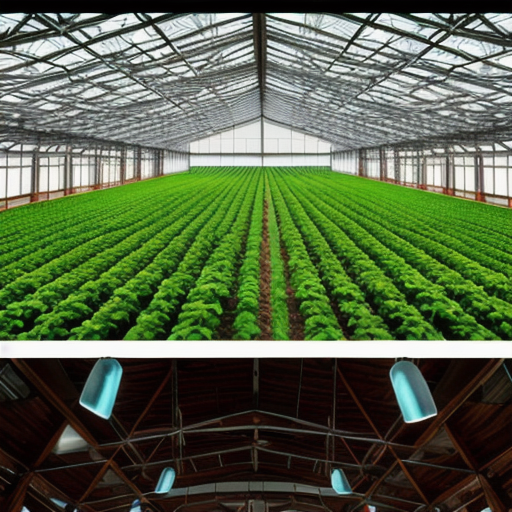
Controlled Environment Farming refers to any system or infrastructure designed to cultivate crops in an atmosphere where crucial factors like temperature, humidity, light, air quality, and even nutrient delivery are managed and manipulated to optimize growth and production. It's quite distinct from traditional open-field farming, which relies heavily on natural elements and is subject to their fluctuations.
Here's a deeper dive into what controlled environments in AgTech entail:
Types of Controlled Environments:
- Greenhouses: Traditional structures covered in glass or plastic, offering partial control over temperature, humidity, and light.
- Vertical farms: Multi-layered indoor systems with artificial lighting and climate control, maximizing space utilization.
- Growth chambers: Enclosed, highly controlled environments used for research,propagation, or specific high-value crops.
- Container farms: Mobile or modular units utilizing controlled environment principles for small-scale production.
Benefits of Controlled Environments:
- Increased yields: Precise control over growing conditions can lead to significantly higher yields compared to traditional farming.
- Improved quality: Consistent growing conditions promote healthier, higher-quality crops with more predictable characteristics.
- Year-round production: Unabhängigkeit from seasons and weather allows for continuous production, enhancing supply chain stability.
- Reduced resource usage: Water, fertilizer,and energy can be used more efficiently due to controlled conditions.
- Reduced reliance on pesticides: Controlled environments minimize pest and disease pressure, potentially lowering chemical use.
- Sustainability: Can be particularly beneficial in urban areas or environments with challenging climates.
Challenges of Controlled Environments:
- High initial investment: Building and maintaining controlled environments can be expensive due to infrastructure and technology costs.
- Energy consumption: Artificial lighting and climate control can lead to high energy demands, requiring sustainable solutions.
- Technical expertise: Operating and maintaining these systems effectively requires specific knowledge and skills.
- Limited crop variety: Not all crops adapt well to controlled environments due to specific light, space, or nutrient requirements.
Overall, controlled environments represent a significant advancement in AgTech, offering solutions for:
- Enhancing food security and production:Addressing growing global food demands,especially in resource-constrained regions.
- Promoting sustainable agriculture:Reducing environmental impact through efficient resource use and minimizing chemical reliance.
- Enabling innovative farming practices:Supporting urban agriculture, vertical farming, and other novel cultivation methods.
While challenges exist, continuous advancements in technology, materials, and energy efficiency are making controlled environments a more cost-effective and accessible option for the future of agriculture.
Member discussion